


Blog
5 Fabric Spec Traps That Add 30% to Your Commercial Blind TCO: Polyester vs Fiberglass

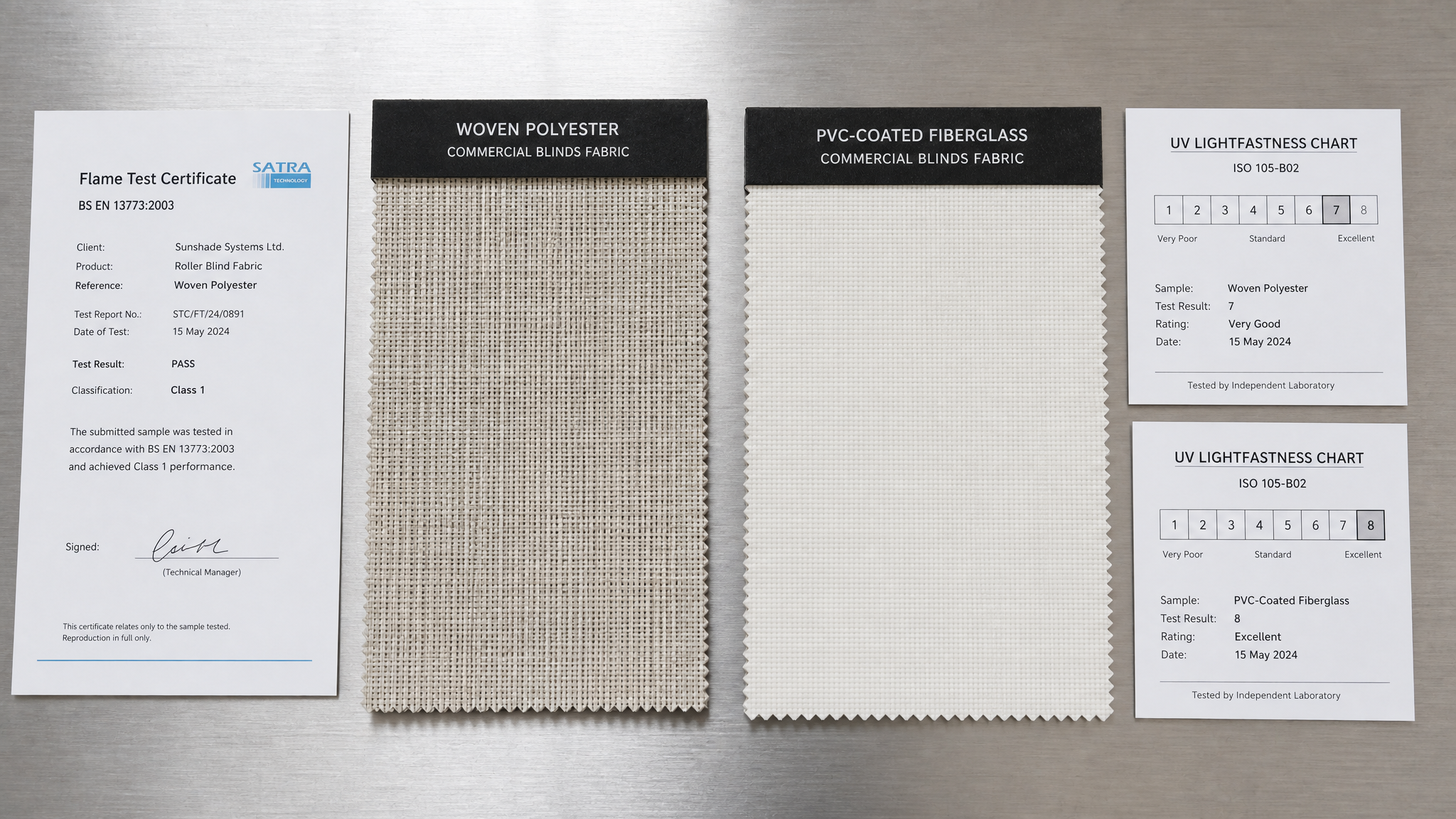
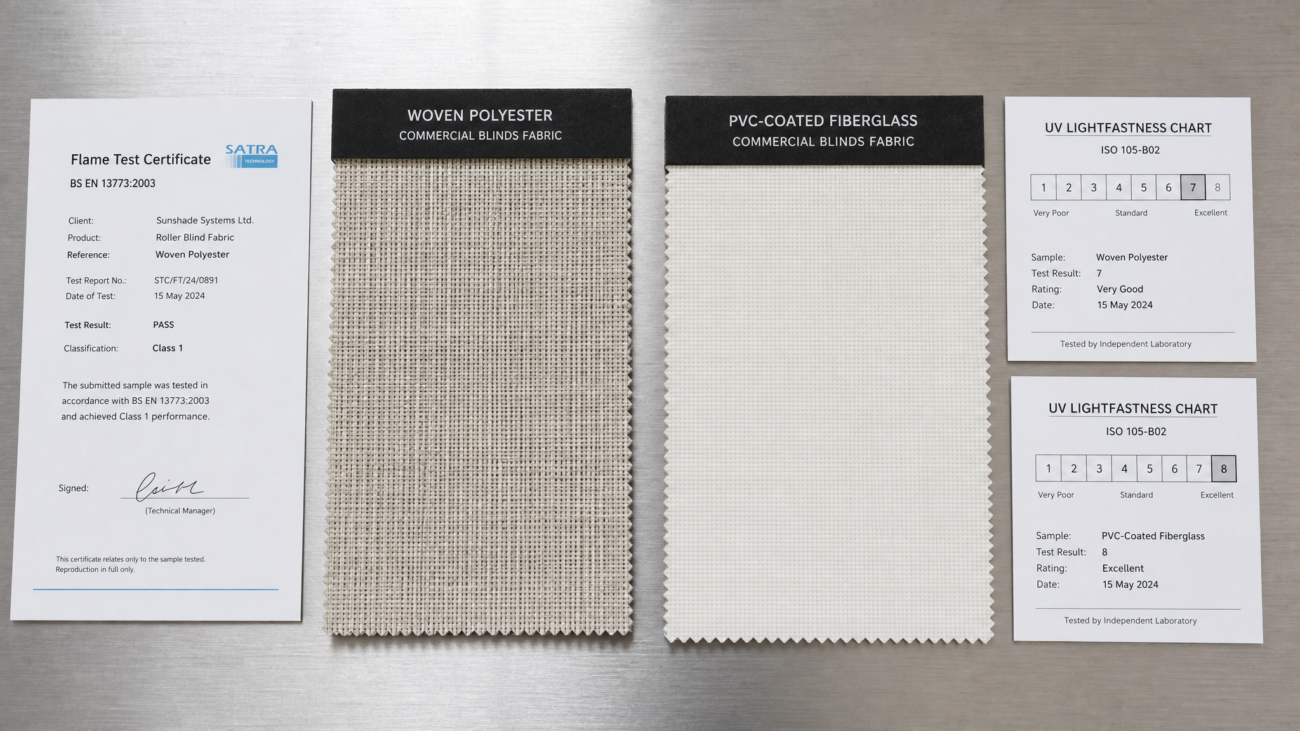
Nearly **40% of commercial blind rework** traces back to one overlooked decision: fabric selection. Commercial blinds fabric is not a cosmetic afterthought — polyester and fiberglass deliver radically different fire ratings, fade windows, and total cost of ownership (TCO). A commercial blinds fabric spec that saves **$3 per square yard** upfront can trigger **$18,000 in replacement and labor costs** after a failed fire inspection or a sun-bleached color mismatch.
This polyester vs fiberglass commercial blinds fabric review breaks down five spec traps that decide whether your project passes code, survives UV exposure, and stays on budget.
## Fire Rating: NFPA 701 vs ASTM E84 — The Non-Negotiable Spec
Fire rating is the first item to audit in any commercial blinds fabric comparison. Polyester blinds fabric is thermoplastic: it melts, drips, and burns unless treated with chemical flame retardants. Fiberglass blinds fabric is inherently non-combustible and holds its rating for the life of the shade.
### How the two materials perform in code testing
– **Polyester blinds fabric**: Typically passes **NFPA 701** only after an FR coating. Chemical treatments wash out after **3-5 cleanings**, silently dropping the fabric below code.
– **Fiberglass blinds fabric**: Passes **ASTM E84 Class A** and **EN 13501-1** without chemical additives. The glass core does not fuel combustion, drip, or emit toxic smoke.
**Key number**: Industry audits show re-testing and re-treating failed polyester panels costs **$4-$8 per square yard** — more than the original fabric price.
## Fade Resistance and UV Stability: Lightfastness Grades Decide Replacement Cycles
Fade is the most visible ROI killer in a commercial blinds fabric spec. A polyester commercial blinds fabric on a south-facing curtain wall can show uneven fading within **18-36 months**. Solution-dyed fiberglass holds color **8-10 years** under the same UV load.
### Reading lightfastness grades like a spec pro
– Polyester woven fabric typically tests at **Grade 4-5** on the blue wool scale (ISO 105-B02). That translates to noticeable fading in **3-5 years** of direct sun.
– PVC-coated fiberglass with UV inhibitors tests at **Grade 7-8**, holding color for **8-12 years**. Open-coat fiberglass also diffuses UV before it reaches the glass, reducing heat and glare without blocking views.
## Waterproofing and Moisture Resistance: Condensation, Mold, and Warranty Risk
Moisture is where polyester commercial blinds fabric specs quietly fail. In high-humidity environments — natatoriums, commercial kitchens, coastal hotels — uncoated polyester blinds fabric wicks condensation and supports mold growth. Fiberglass blinds fabric with a PVC coating is fully waterproof and wipes clean.
### Choosing the right fabric for wet and humid zones
– **Polyester**: Hydrophobic surface, but an open weave absorbs ambient moisture. Uncoated polyester above **60% relative humidity** becomes a mold liability.
– **Fiberglass**: PVC-coated fiberglass seals the surface, resists mold, and tolerates washdown cleaning. Healthcare and food-service specs favor it for exactly this reason.
## Cost per Square Yard and Total Cost of Ownership: $3 Upfront vs $18K Later
Cost is where buyers lose the most money on commercial blinds fabric. Polyester blinds fabric runs **$2-$6 per square yard**; coated fiberglass blinds fabric runs **$8-$18 per square yard**. On paper, polyester wins — in TCO, it often loses.
### The 10-year TCO math most RFQs ignore
– A **5,000 sq ft** glazing package uses roughly **6,500 sq ft** of fabric.
– Polyester at **$4/sq yd** costs about **$2,900** upfront — but needs replacement in **4 years**, then again in **8 years**.
– Fiberglass at **$12/sq yd** costs about **$8,700** once and lasts **10+ years**.
– Add two polyester re-installations (**$6,000** in labor) plus disposal and downtime, and the “cheap” commercial blinds fabric costs **$18,000 more** over a decade.
Reliable manufacturers typically quote TCO, not just per-yard cost. To avoid costly chargebacks, ask for the 10-year replacement schedule in writing.
## Project Type Match: Offices, Healthcare, Schools, and Hospitality
The right commercial blinds fabric depends on occupancy, sun exposure, and code jurisdiction. Matching fabric to project type prevents 90% of warranty disputes.
### Fabric recommendations by project type
– **Offices & light commercial**: Polyester works for north/east exposures and tenant fit-outs with **5-year** lease cycles.
– **Healthcare & labs**: Fiberglass — **ASTM E84 Class A**, wipeable PVC, and mold resistance are baseline requirements.
– **Schools & education**: Fiberglass on south/west elevations. Children’s spaces often require non-toxic, non-dripping FR.
– **Hospitality & atriums**: PVC-coated fiberglass for tall curtain walls, pools, and sunrooms where fading and moisture hit hardest.
## How to Audit a Commercial Blinds Fabric Spec in 15 Minutes
Use this checklist before signing any PO. Reliable manufacturers will supply all five data points without hesitation.
### The 5-point spec audit
1. **Fire test report**: Confirm NFPA 701 and ASTM E84 Class A — not a marketing claim.
2. **Lightfastness grade**: Demand ISO 105-B02 Grade 7+ for sun-loaded elevations.
3. **Coating and moisture spec**: Verify PVC coating thickness and mold-resistance rating for humid zones.
4. **Warranty length**: Polyester warranties average **3-5 years**; fiberglass averages **8-12 years**.
5. **10-year TCO quote**: Get replacement, labor, and downtime costs in writing.
## Conclusion: 3 Takeaways That Protect Your Budget
**1. Fire rating is non-negotiable.** Fiberglass holds ASTM E84 Class A inherently; polyester relies on washable FR treatments.
**2. Fade and moisture decide TCO.** Polyester saves $3 per yard now but can cost **$18,000 more** in replacements within a decade.
**3. Match fabric to project type.** Polyester suits short-cycle office fit-outs; fiberglass wins healthcare, education, hospitality, and any south-facing glass.
Use this 15-minute audit checklist to stress-test your current commercial blinds fabric supplier before your next PO.
—
## 📚 Related Resources
Commercial roller shade fabric guide → /guides/commercial-roller-shade-fabrics
NFPA 701 vs ASTM E84 fire ratings explained → /blog/nfpa-701-vs-astm-e84-fire-ratings
Blind fabric yardage calculator → /guides/blind-fabric-yardage-calculator
PVC-coated fiberglass supplier directory → /suppliers/pvc-coated-fiberglass-blinds
Commercial blind warranty checklist → /guides/commercial-blind-warranty-checklist
—
## ❓ Frequently Asked Questions
**Q:** What is the main difference between polyester and fiberglass commercial blinds fabric?
**A:** Polyester is softer and cheaper but melts, drips, and fades faster. Fiberglass is inherently fire-rated, dimensionally stable, and lasts 8-12 years versus 3-5 years for standard polyester.
**Q:** Is fiberglass blinds fabric more expensive than polyester?
**A:** Yes upfront. Coated fiberglass runs $8-$18 per square yard versus $2-$6 for polyester. However, its 10-year total cost of ownership is usually lower because it avoids multiple replacements.
**Q:** Which commercial blinds fabric is best for humid areas like pools or kitchens?
**A:** PVC-coated fiberglass. Its sealed surface is waterproof, mold-resistant, and tolerates washdown cleaning.
**Q:** Does polyester blinds fabric meet commercial fire codes?
**A:** Only when chemically treated. Fiberglass passes ASTM E84 Class A and NFPA 701 inherently, without FR coatings that wash out.
**Q:** How long does each fabric last in direct sunlight?
**A:** Standard polyester shows visible fading in 3-5 years. Solution-dyed fiberglass with UV inhibitors typically holds color for 8-12 years.