


Blog
7 Proven Strategies to Reduce Commercial Curtain Procurement Costs by 32%

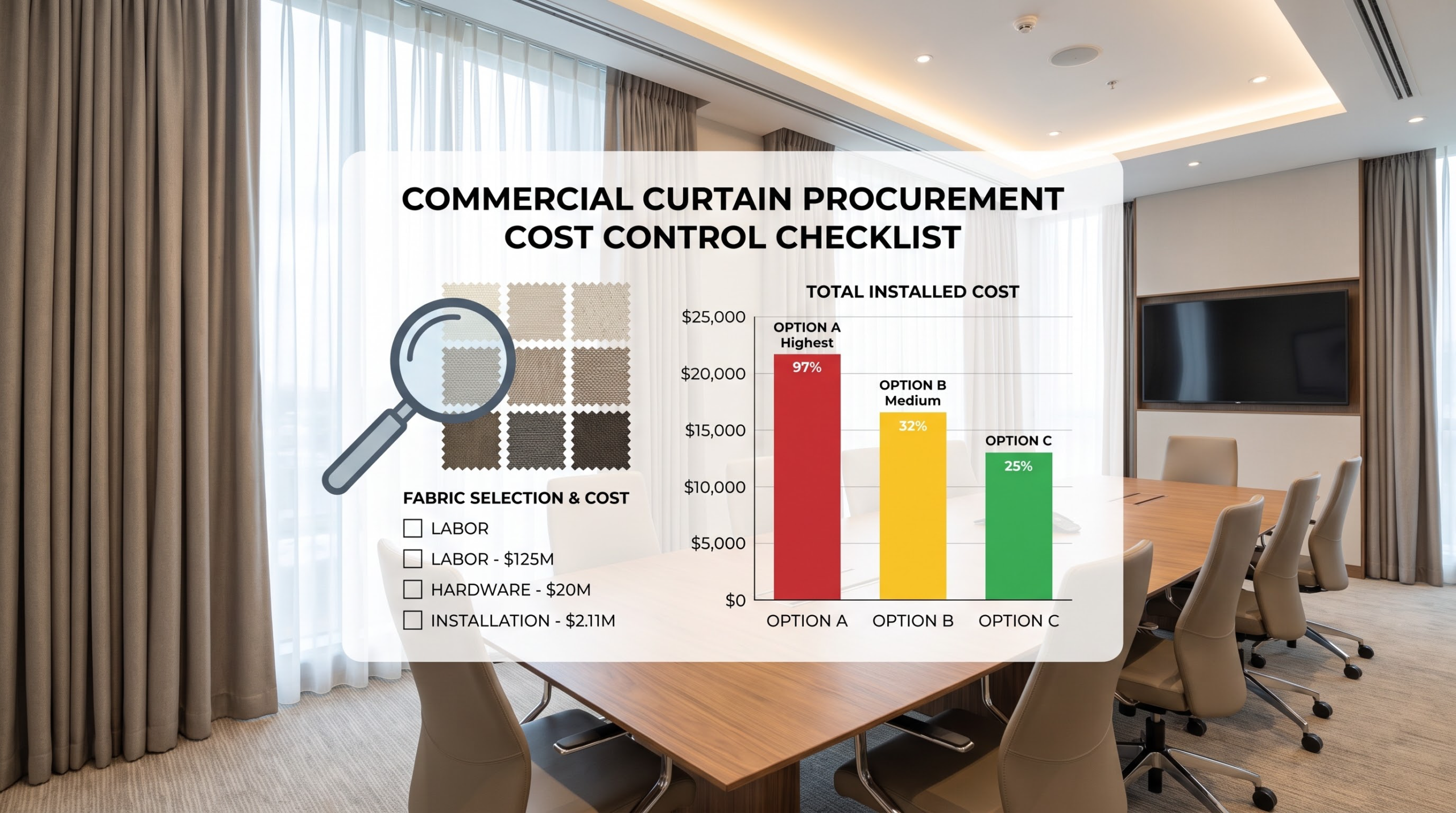
Commercial projects lose between 18% and 35% of their window covering budget to hidden distributor markups, over-specified fabrics, and fragmented ordering. That makes commercial curtain procurement cost control a bottom-line issue, not an afterthought. Most buyers ask, “What is the price per meter?” The more profitable question is, “What drives total installed cost per room?” This guide breaks down the exact levers — from source-factory pricing to fabric tier selection — that reliable manufacturers use to cut cost without compromising fire ratings, light control, or durability.
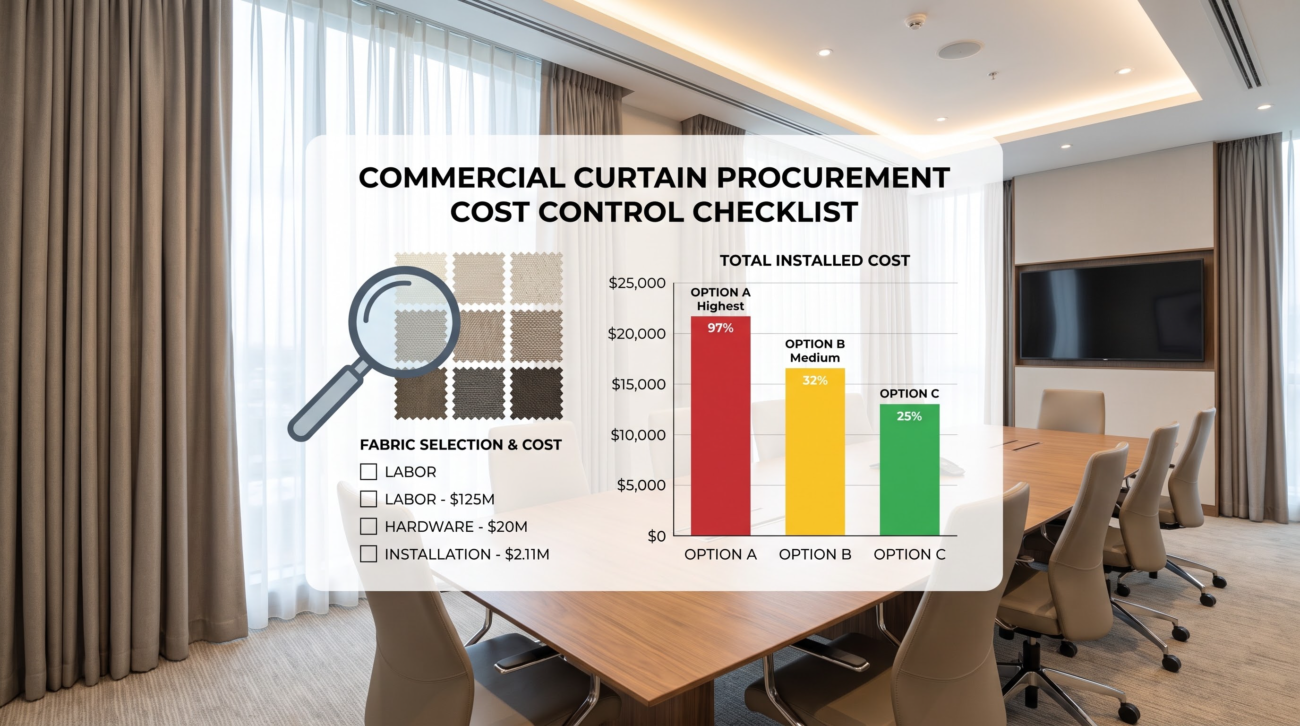
The Real Cost Drivers in Commercial Curtain Procurement
Industry audits show that the quoted fabric price often represents only 45–60% of the final installed cost. The remaining budget disappears into middleman markups, hardware mismatches, expedited freight, and change orders. Reliable manufacturers typically price from a total-cost model: fabric, lining, hardware, fabrication, shipping, and installation.
– Distributor and trading-company markups: 12–25%
– Over-specification: fire-retardant treatment or fabric weight beyond actual requirement
– MOQ traps: forced overbuying of 20–40%
– Rework from unclear specifications and non-standard hardware
7 Proven Strategies to Reduce Commercial Curtain Procurement Costs by 32%
1. Source Directly From the Factory to Remove Middleman Markups
Working with a source factory removes 12–25% in distributor margin. Request production line evidence, not just a sales office address. Reliable manufacturers typically share fabric mill certifications and in-house fabrication capacity.
2. Use a Multi-Tier Fabric Program
Instead of one premium fabric for every space, apply a three-tier strategy: high-traffic public areas get 100,000+ double rubs; guest rooms get 50,000+; back-of-house gets functional 30,000+ polyester blends. This alone can reduce fabric cost by 15–30%.
3. Optimize the Specification Before Quoting
Specify exact fullness — usually **2x** for hospitality and **1.5x** for offices — plus stack-back and lining type. Avoid vague terms like “blackout” without a defined backing. Over-specification often adds **10–20%** in unnecessary material.
4. Consolidate Orders to Beat MOQ Traps
Combine floors, phases, or properties into one purchase order. This unlocks volume pricing and prevents small-order surcharges of **8–15%**. A **single consolidated PO** also reduces freight per unit.
5. Standardize Hardware and Track Systems
Hidden cost often sits in custom brackets, motors, and non-standard tracks. Choose a modular track system that accepts multiple fabric weights. Standardized hardware cuts installation labor by up to **20%**.
6. Build Quality Assurance Into the Contract
To avoid costly chargebacks, require a pre-production sample, a bulk production approval swatch, and a final QC report with photos before shipping. Third-party inspections cost a few hundred dollars but prevent rework claims of **$5,000–$50,000**.
7. Plan Logistics Around the Construction Schedule
Expedited air freight can erase your entire procurement saving. Use ocean or truck freight with **4–6 week** lead times and schedule installation after dust-generating work is complete. Late delivery is a cost; so is storing curtains on site.
Supplier Red Flags That Inflate Commercial Curtain Total Cost of Ownership
Price alone is a dangerous KPI. A low unit price with weak quality control becomes a chargeback, a safety violation, or a replacement order. Industry audits show that **1 in 4** commercial curtain orders experience at least one specification deviation.
– No in-house fabrication — the supplier is only trading.
– Cannot provide NFPA 701 or other required fire certificates.
– MOQ quoted without explaining production run logic.
– Samples use premium material, but the bulk quote uses a cheaper alternative.
– Vague lead time with no weekly production updates.
How to Audit Your Commercial Curtain Procurement Process
Collect Line-Item Quotes
Ask three suppliers for installed cost per square meter, not fabric price per meter. Compare fabric, lining, hardware, labor, freight, and waste separately.
Request a Value-Engineering Memo
A reliable supplier should propose at least one tier-down option that preserves fire safety and durability. This memo shows whether the supplier is protecting your budget or protecting its margin.
Verify Certifications and Factory Location
Confirm NFPA 701, ASTM, or local fire certificates. Request a live video walkthrough of the production line, not just a website photo.
Conclusion: Control the System, Not Just the Price
The three highest-impact moves are: source directly from the factory to remove **12–25%** middleman margin; apply a multi-tier fabric and specification strategy to save **15–30%**; and lock quality control plus logistics to prevent rework that destroys margin. Use this checklist to audit your current supplier before your next purchase order. If a supplier cannot show factory evidence, tiered pricing, and a QC gateway, you are likely leaving **20–30%** on the table.