


Blog
7 Custom Hotel Blind Pitfalls That Add 30% to Your Renovation Budget

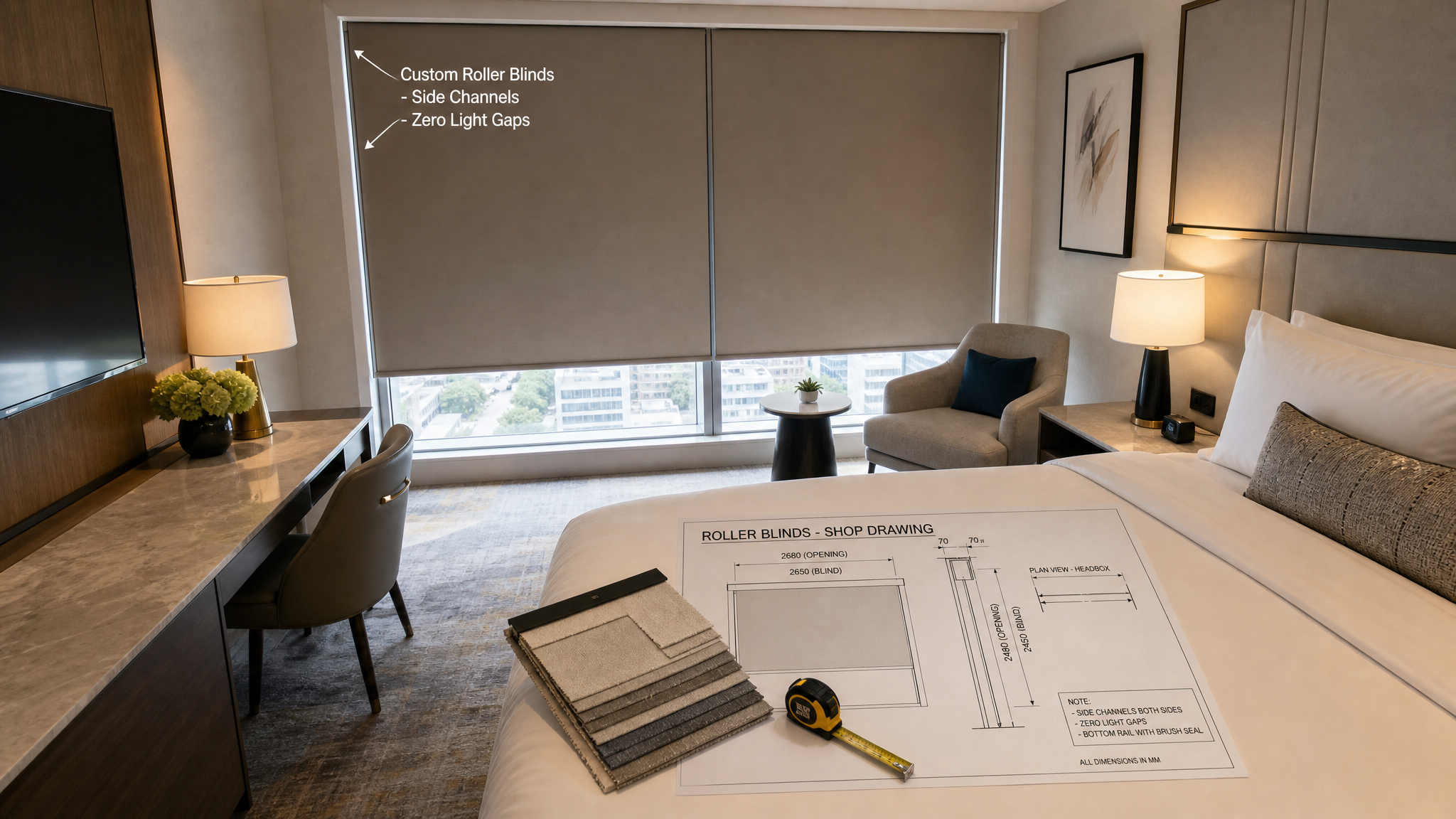
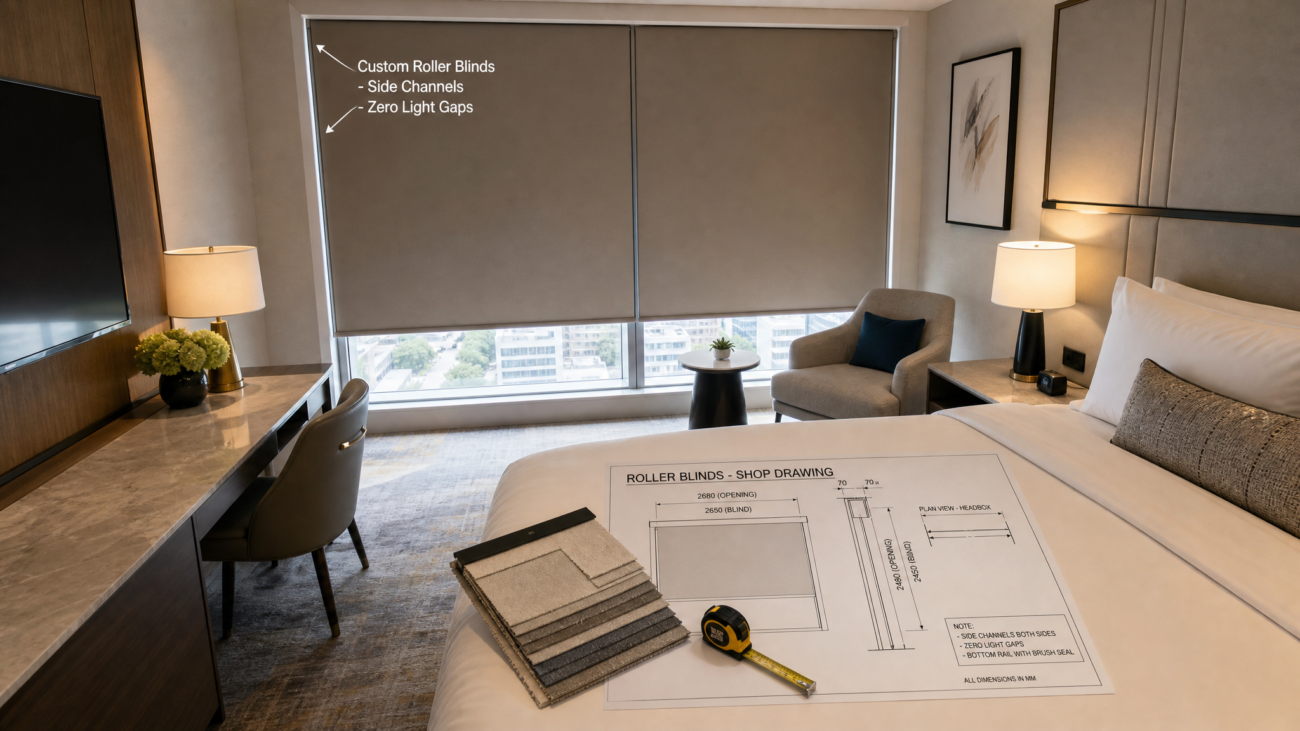
Nearly 1 in 3 hotel renovation projects misses its pre-opening deadline because of one overlooked line item: **custom commercial blinds for hotel projects**. Procurement teams lock in beds, lighting, and FF&E, then discover the window treatments arrive late, fail inspection, or don’t match the as-built openings. The typical result is a **30% budget overrun** and a scramble that burns contractor trust.
Industry audits show most failures in **hotel project blinds** are predictable and preventable. Reliable manufacturers run the same pre-production checks every time, but too many buyers skip them. Here are seven red flags that separate a smooth **custom hotel blinds** rollout from a chargeback disaster.
## Pitfall #1: Non-Standard Sizes That Force Expensive Rework
Hotel windows are rarely square, and stock-size blinds force installers to shim, trim, or rebuild openings. A factory limited to standard widths produces visible gaps, uneven stack heights, and light leaks that guests notice within the first night.
### How to Verify Non-Standard Size Capability
– Ask for a written size range per product line: width, drop, and mounting depth.
– Confirm the factory cuts to as-built site measurements, not only to drawings.
– Request two or three hotel project references with atypical window shapes.
A dependable **custom commercial blinds supplier for hotel projects** accepts site-measured data and produces non-standard sizes without a penalty upcharge. To avoid costly chargebacks, lock this capability into the purchase order before paying the deposit.
## Pitfall #2: Fabric That Fails Fire-Retardant and Blackout Compliance
Hotel inspectors check two things first in guest rooms: flame-retardant certificates and blackout performance. Low-cost suppliers often quote decorative fabric with no FR test report, or deliver only partial blackout on **custom commercial blinds**.
### Compliance Documents to Request Before Deposit
– FR certificate: NFPA 701, BS 5867, or EN 13773 depending on region.
– Blackout test result showing **99% or better** light blockage for guest room blinds.
– Lead-free and low-VOC statements for indoor air quality.
Without these, a failed inspection can delay occupancy by weeks. Reliable manufacturers typically supply third-party test reports, not a sales claim. For hotel projects, treat flame-retardant and blackout fabric compliance as a go/no-go gate—not a negotiation point.
## Pitfall #3: Vague Delivery Schedules That Wreck Opening Timelines
“Four to six weeks” is not a delivery commitment. Hotel openings run on hard dates, and late window treatments block room turnover, photography, and final sign-off. Suppliers that cannot name a ship date usually lack real production control over **hotel blinds**.
### How to Lock Down Lead-Time Control
– Require a production schedule with milestones: material, cutting, sewing, QC, packing.
– Ask for weekly photo or video updates from the production floor.
– Agree on a penalty or air-freight clause for factory-caused delays.
Effective delivery management for **hotel blind projects** means the factory confirms capacity before accepting the order. A supplier that overpromises lead time is often hiding a third-party production bottleneck.
## Pitfall #4: Rigid MOQ Traps That Inflate Inventory Costs
High minimum order quantities force hotels to buy 500 units when only 320 rooms need **custom commercial blinds**. That excess stock becomes dead inventory, storage cost, and wasted budget—especially during phased renovations.
### Smart MOQ Questions to Ask
– Is the MOQ per fabric, per color, or per entire order?
– Can different hotel room types be combined to reach the MOQ?
– What is the MOQ for replacement parts after the main order?
Flexible MOQ for **custom hotel blinds** lets you order exact room counts plus 5-10% spare units. This protects service continuity without overbuying. A trustworthy **commercial blind supplier for hotel projects** treats MOQ as a logistics detail, not a margin trap.
## Pitfall #5: Missing Shop Drawings and Installation Chaos
A quote without shop drawings is a guess. Hotels have window reveals, HVAC vents, curtain tracks, and blackout overlaps that only become clear in a detailed submittal for **hotel project blinds**. Suppliers that skip drawing review push the risk onto installers.
### What a Professional Submittal Should Include
– Section drawings showing mounting bracket position and stack depth.
– Elevation drawings per room type with dimension callouts.
– Hardware schedule listing brackets, screws, chains, and child-safety devices.
Drawing support for **hotel window treatments** turns an estimate into an executable scope. Request approval drawings before production begins. This single step prevents most fit, stack, and hardware conflicts on site.
## Pitfall #6: Color Drift and Missing Hardware Components
Fabric dye lots change between production batches, and small parts disappear during shipping. Hotels that order in phases often receive a second batch of **custom commercial blinds** that is visibly lighter than the first. Missing brackets, screws, or wands then stall installation crews.
### How to Prevent Color Drift and Parts Shortages
– Request a physical fabric swatch or hank approval before mass cutting.
– Require a single dye-lot guarantee for all rooms of the same colorway.
– Ask for a 2-5% overage on screws, brackets, and plastic components.
Avoiding color difference in **hotel blinds** starts with dye-lot control, not luck. A serious **custom hotel blinds factory** packs a hardware kit per room and includes a checked packing list to eliminate missing accessories.
## Pitfall #7: Hidden Costs After the Quote
The lowest quote is rarely the cheapest **hotel blind project**. Watch for added fees on custom commercial blinds: remote-area delivery surcharges, site-measure revisits, rush production premiums, and import duties left out of the EXW or CIF terms.
### A Complete Quote Should Itemize
– Unit price by room type and size band.
– Tooling or setup fees, if any.
– Freight, insurance, and delivery-to-door terms.
– Duty/tax responsibility and payment schedule.
Reliable manufacturers typically disclose these costs in the first offer. For **custom-made commercial blinds for hotel projects**, insist on an all-in, line-item quotation so you can compare suppliers on true total cost, not a teaser price.
## Conclusion: Audit Your Hotel Blind Supplier in 3 Steps
The difference between a smooth hotel opening and a costly blind failure comes down to pre-production discipline. First, verify non-standard size capability and fabric compliance certificates before any deposit. Second, lock delivery milestones, flexible MOQs, and shop-drawing approval into the contract. Third, demand dye-lot control, hardware overage, and a fully itemized quote for your **custom hotel blinds**.
Use this 3-point checklist to audit your current supplier: **(1)** FR and blackout test reports on file, **(2)** written production schedule with weekly updates, **(3)** line-item pricing with no hidden surcharges. If any answer is vague, treat it as a red flag.
Send this checklist to your supplier today. If they cannot answer all three points within 48 hours, request quotes from two factories that specialize in **custom commercial blinds for hotel projects**.
—
## 📚 Related Resources
1. Anchor: “custom hotel blackout blinds guide” → URL slug /custom-hotel-blackout-blinds-guide
2. Anchor: “flame retardant fabric certification checklist” → URL slug /flame-retardant-fabric-certification-checklist
3. Anchor: “hotel window treatment shop drawing templates” → URL slug /hotel-window-treatment-shop-drawing-templates
4. Anchor: “MOQ negotiation tips for hotel suppliers” → URL slug /moq-negotiation-tips-hotel-suppliers
—
## ❓ Frequently Asked Questions
**Q: What is the typical MOQ for custom commercial blinds for hotel projects?**
**A:** MOQs vary widely by factory, but many require 100–500 units per fabric or color. A flexible supplier lets you combine room types to reach the MOQ and order small spare-part batches after the main run.
**Q: Which fire-retardant certificate do hotel blinds need?**
**A:** It depends on the region: **NFPA 701** in the U.S., **BS 5867** in the UK, and **EN 13773** in the EU. Always request a third-party test report rather than a supplier’s verbal claim.
**Q: How do I prevent color difference between two blind batches?**
**A:** Approve a physical fabric swatch before production, require a single dye-lot guarantee for the same colorway, and order spare units in the same production run to avoid visible shade drift.
**Q: How far in advance should I order hotel project blinds?**
**A:** Budget **6–8 weeks** of production plus freight and customs clearance. Confirm factory capacity and require weekly milestone updates before paying the deposit.
**Q: Can factories make non-standard size blinds without extra charges?**
**A:** Yes, specialist hotel blind factories typically build custom sizing into the unit price, but you should confirm in writing that site-measured, non-standard dimensions carry no penalty upcharge.