


Blog
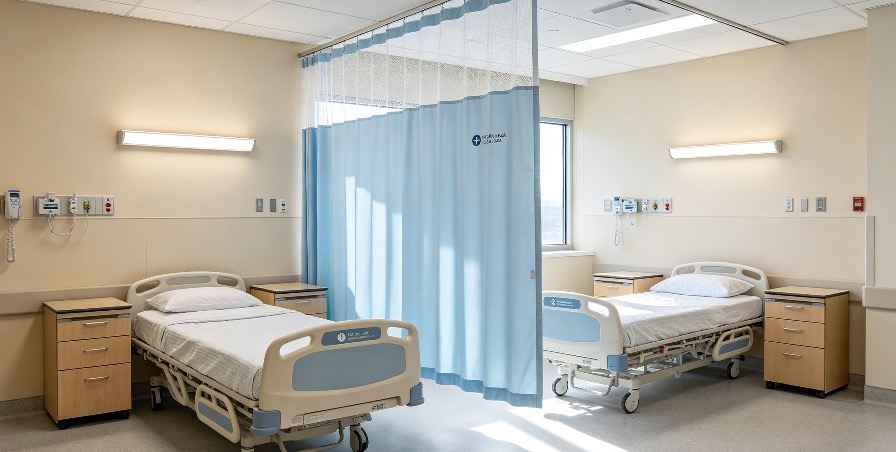
Case Study: Custom Privacy Curtain Solution for The Johns Hopkins Hospital, Baltimore

Project Background
In 2015, JSL was selected to supply and install custom antimicrobial patient privacy curtains for a major patient room renovation project at The Johns Hopkins Hospital (JHH) in Baltimore, Maryland. The project encompassed semi‑private and shared patient care areas across the hospital‘s historic campus, covering over 800 bed spaces including medical‑surgical units, oncology floors, and transitional care wards.
Founded on May 7, 1889, by a bequest from Baltimore merchant and banker Johns Hopkins, the hospital has long been recognized as the founding institution of modern American medicine and has consistently ranked among the top five hospitals in the United States. Today, the Johns Hopkins Hospital operates approximately 1,150 patient beds and employs over 40,000 staff members, making it the largest private employer in Baltimore. As a world‑renowned teaching hospital affiliated with the Johns Hopkins School of Medicine, the facility serves more than 43,000 annual inpatients and over 94,000 emergency department visits each year, with stringent infection prevention standards governed by CDC and HICPAC guidelines.
Technical Challenges
JSL‘s engineering team conducted a preliminary on‑site assessment of the targeted patient wards and identified four distinct challenges unique to the healthcare environment:
- Infection Control Compliance & Antimicrobial Performance: Privacy curtains in shared patient rooms are classified as “near‑patient surfaces” and have been identified in CDC and HICPAC guidelines as potential reservoirs for healthcare‑associated pathogens, including MRSA and vancomycin‑resistant Enterococcus. Studies have shown that hospital privacy curtains can become contaminated within days of installation, yet current infection control guidance typically recommends curtain changes only “when visibly soiled” or “after contact with infectious material”—leaving a significant gap in active prevention. The hospital sought a fabric that would actively reduce microbial load between scheduled laundering cycles.
- Flame Safety & Regulatory Certification: All fabric materials used in patient care areas are required to pass flame propagation tests under NFPA 701, the standard methods for fire tests of textiles and films used in healthcare settings. The curtain panels being replaced from the older sections of the campus had accumulated decades of wash cycles, degrading both their flame‑retardant properties and their tensile strength. The new curtains required certification to meet both NFPA 701 large and small‑scale test criteria and to maintain compliance with The Joint Commission‘s Environment of Care standards.
- Space Constraints & Track Complexity: The original patient wards were constructed prior to modern private‑room design standards. The Charlotte R. Bloomberg Children’s Center and the Sheikh Zayed Tower, which opened in 2012, feature 560 all‑private rooms, but the historic campus wings from the pre‑2012 era still operate with semi‑private configurations. In these older wings, patient beds are separated by L‑shaped and U‑shaped cubicle curtain track configurations, with minimal ceiling clearance and limited access to structural mounting points. These irregular track geometries required custom‑fabricated curtain panels with precise fullness ratios and reinforced header carriers to ensure smooth, quiet operation.
- Uninterrupted Clinical Operations: The hospital remained fully operational throughout the replacement project. Work was restricted to daytime hours only, but installations could not disrupt patient care activities, vital sign monitoring, medication administration, or nursing rounds. In shared rooms, each bed curtain had to be replaced individually without moving or disturbing the patient in the adjacent bed.
The JSL Solution
In response to these demanding clinical and compliance requirements, JSL deployed its specialized medical textiles and healthcare OEM capabilities:
- Antimicrobial Silver‑Ion Embedded Fabric: Instead of topical antimicrobial coatings that degrade with laundering, JSL sourced fabric with silver‑ion technology permanently integrated into the polyester fibers at the molecular level. Silver has well‑documented antimicrobial properties against a broad spectrum of bacteria and fungi. Independent testing confirmed that the fabric achieved better than 99% reduction in viable pathogens, including MRSA and E. coli, with antimicrobial efficacy persisting through multiple industrial laundry cycles.
- Inherently Flame‑Retardant Compliance: The selected curtain fabric was engineered to meet NFPA 701 flame propagation standards without reliance on topical flame‑retardant coatings that wash out over time. Certification documentation was provided for both large and small‑scale test methods, satisfying The Joint Commission‘s survey requirements for textile finishes in patient care environments.
- Custom Fabrication for Non‑Standard Track Geometries: JSL performed detailed measurements of every L‑shaped and U‑shaped track configuration in the renovated wards. Curtain panels were fabricated with hemmed mesh headers, reinforced carriers, and bottom weight pockets designed specifically for the hospital‘s existing track systems. For the shared four‑bed wards, we produced dual‑layer cubicle curtains with an opaque privacy layer backed by a light‑filtering inner panel to balance patient dignity with staff visibility.
- Single‑Bed Sequential Installation Protocol: To avoid patient disruption, JSL developed a single‑bed replacement protocol. Installation teams coordinated with nursing staff to identify periods when each bed was temporarily unoccupied—typically during morning bathing, physical therapy sessions, or off‑unit diagnostic testing. Each curtain panel was swapped out in under twelve minutes, with the old panel removed, track carriers inspected, and the new panel installed without generating airborne lint or dust.
Execution & Project Management
The Johns Hopkins Hospital project was executed over a scheduled duration of sixteen weeks, with work divided across three geographical zones of the campus: the historic Billings Administration Building wards, the Nelson/Harvey Building patient floors, and one wing of the Weinberg Building. Each daily installation window was cleared in advance through the hospital‘s facility management system, with JSL technicians wearing hospital‑issued identification badges and full PPE. A dedicated infection control observer from the hospital‘s epidemiology team conducted spot checks during installation activities to verify compliance with construction ICRA protocols. All removed curtain panels were bagged and sealed on‑site before transport to hospital laundry facilities for terminal cleaning or disposal.
Results & Client Feedback
The project was completed on schedule with zero infection control violations, zero patient safety incidents, and zero interference with documented clinical care activities.The hospital‘s Associate Director of Facilities Operations offered the following:
”The JSL team understood that patient privacy curtains are not decorative items—they are clinical barriers that must perform on three fronts: infection reduction, fire safety, and patient dignity. Their silver‑ion fabric selection addressed a long‑standing infection prevention gap, and their no‑disruption installation protocol showed real respect for our patients and nursing staff. We now have a consistent, replaceable standard for cubicle curtains across multiple building ages, and the nursing staff has already reported improved ease of cleaning and smoother curtain movement.“
This project has established JSL as an approved vendor for healthcare textiles within the Johns Hopkins Health System and serves as a reference case for other academic medical centers seeking to upgrade their patient privacy curtain standards. For healthcare facility managers and infection preventionists, this case demonstrates a replicable model for addressing the overlooked infection risk posed by fabric curtains in shared patient rooms—turning a passive privacy screen into an active, measurable component of the hospital‘s infection control program.